← Training SplitsView exerciseView exerciseView exerciseView exerciseView exerciseView exerciseView exerciseView exerciseView exerciseView exerciseView exercise View exerciseView exerciseView exerciseView exerciseView exerciseView exerciseView exerciseView exerciseView exerciseView exerciseView exerciseView exercise View exerciseView exerciseView exerciseView exerciseView exerciseView exerciseView exerciseView exerciseView exerciseView exerciseView exercise View exerciseView exerciseView exerciseView exerciseView exerciseView exerciseView exerciseView exerciseView exerciseView exerciseView exerciseView exercise
Personal · Active base
Foundation 120
Ali's personal hypertrophy engine — a machine-first 4-day upper/lower at 190 cm / 120 kg: V-taper priority, full biceps/triceps head coverage, and a repeating 12-week progressive cycle that feeds a multi-year bodybuilding path.
Goal
Recomposition into a classic bodybuilding look — V-taper, strong legs, thick arms, visible midsection path — with strength climbing every mesocycle while body fat trends down.
- 4
- Days / week
- 46
- Exercises
- 141
- Total sets
- ~100 min
- Session time
Periodization
The mesocycle
PhaseWeeksIntensityRIRFocus
PhasePrimeWeeksWeeks 1–3Intensity65–70% 1RMRIR3 RIRFocusFull volume by week 3 — weeks 1–2 run accessory and core rows one set short while the cycle loads up. Double progression starts now — reps first, then load. Seat settings stay written down; the work is progressive, not exploratory.
PhaseBuildWeeksWeeks 4–8Intensity68–74% 1RMRIR3 RIRFocusConvert clean top-of-range sets into the next pin or plate. This is where most of the cycle's muscle is earned — stay patient on increments, ruthless on logging.
PhasePushWeeksWeeks 9–11Intensity72–78% 1RMRIR2 RIRFocusWork sets get honestly hard. Keep the arm-head map and V-taper priorities intact. Optional: if joints stay quiet late in this block, note which compounds are ready for barbell swaps on the next program — do not derail this cycle mid-push.
PhaseDeload & decideWeeksWeek 12Intensity−10% loadRIR4+ RIRFocusHalf sets, re-test, then choose: another Foundation cycle at a higher baseline, or graduate when Intermediate loads are owned.
How to run it
When do you level up?
Column rule: own EVERY top-of-range set at a column's loads for two consecutive weeks, then the next column is yours. Cycle rule: finish Week 12, then either restart Foundation at the higher baseline or graduate when Intermediate is owned and joints are quiet. Year rule: Foundation → barbell Upper/Lower → Bro/PPL → advanced blocks — the physique is a multi-year build, not a 12-week transformation.
Roadmap
Your path — 3 to 5 days
- 01
Now — Month 3
Foundation 120 — active cycles
This program on repeat. Each 12-week cycle ends in a deload and a higher baseline. Exit when Intermediate-column loads are yours for two straight weeks and joints are quiet — bodyweight trending toward ~110 kg usually comes along on its own — typically one or two cycles, not a year of the same beginner script.
- 02
Months 3–6
Barbell Upper / Lower
Same four-day frame. Barbell squat and bench take the primary slots and the straight-leg deadlift becomes the hinge; the printed template runs a leaner arm block, so carry Foundation's arm-head finishers over as your accessory work — your log keeps the V-taper and arm priorities alive, not the page. This is the load and implement upgrade — not the first time you train for shape.
Open program - 03
Months 6–12
Bro Split or PPL — specialization year
Higher regional volume: a back day and a shoulder day for the V, a dedicated arms bias if needed, legs still sacred. Choose Push/Pull/Legs if you can train 6 days. Target: approach ~100 kg with visible shape, not just a lower scale number.
Open program - 04
Year 2+
Advanced bodybuilding blocks
Alternate hypertrophy and strength-biased mesocycles (8–12 weeks), keep deloads, refine weak points (upper chest, rear delts, hamstrings, calves). Contests are optional — the physique standard stays: V-taper, thick arms, strong legs, tight waist. Programs in this app remain the template library; your log decides the next block.
Open program
Volume check
Weekly muscle coverage
Direct hard sets per muscle group per week — synergists not counted (pressing also works the triceps, pulling the biceps). 10–20 hard sets is the growth zone: below is maintenance, above demands elite recovery.
MuscleHard sets / weekFrequency
Chest112× / week
Lats102× / week
Upper back & traps152× / week
Shoulders132× / week
Biceps123× / week
Triceps124× / week
Quads102× / week
Hamstrings102× / week
Glutes192× / week
Calves102× / week
Core154× / week
How to run it
How to run it
Find your weight
Load columns are targets, not frozen day-one guesses. Use the weights in your log. If a lift still feels wildly off: one calibration set at the column weight — if 4+ reps remain at the target RIR, add one increment next set; if you miss the bottom of the range, drop one increment. Never chase a 1RM test inside a working week — nothing that teaches is worth the joint cost at this bodyweight.
How to run it
Prime is banked — the first block of this cycle is done and you are in Build (weeks 4–8): full prescription on every row, 3 RIR on the primary and secondary lifts — accessories keep their printed row RIR — and the job now is converting clean top-of-range sets into the next pin or plate. Four days, upper/lower: most muscles twice a week; arms three to four times and side delts twice because that is how a V-taper and big arms are built. The adductor machine now closes the inner-thigh gap on both lower days, and a short pelvic-floor drill rides every day's core block — supine and bridged on lower days, standing on upper days; squeeze and lift on the exhale, never strain. Sessions land near 80–95 minutes including the walk-down. Keep running the 12-week cycle on a loop: each deload week resets the baseline higher, until the Intermediate column is yours for two straight weeks — then graduate. Machines stay primary until joints are quiet; barbells enter on the next program, not as a distraction here. Priority when time is short: never cut the pulldown, the lateral raise, the leg press, or the arm-head finishers. Station taken? Use the listed alternatives and keep moving. Junior / Intermediate / Advanced are load columns for month-now / month-3 / month-6 targets — not experience labels.
Progression
Double progression on every lift: add a rep per set until the top of the range is clean at the target RIR, then +one increment and drop back. Weigh in once a week, same morning — aim −0.5 to −1 kg/week while gym numbers rise. Scale stall + climbing lifts = recomposition working. After each deload, the new baseline is your next cycle's floor.
Warm-up
5 min incline walk to raise the heart rate, then arm circles, hip hinges and bodyweight box squats. Per machine: one light set of 15 at half the working weight. You carry 120 kg all day — the warm-up is what keeps knees and shoulders in the game.
Autoregulation (RPE/RIR)
RIR = reps in reserve (left in the tank); RPE 8 = 2 RIR. Pick a load that lands you on the target RIR at the last rep — feel strong, add weight; feel flat, take some off. Anchor every working weight to YOUR own 1RM, not the reference numbers. Row percentages are Prime anchors — in Build and Push let the mesocycle band and the RIR target pull the load up; the printed % is the floor of the cycle, not its ceiling.
Cardio
Built in: 10–15 min incline walk or cross-trainer after upper days, 5–10 min cool-down after lower days, plus 8–10k daily steps. Add nothing else for 12 weeks — at 120 kg, extra cardio steals recovery before it burns fat. The walking and the deficit do the work.
Deload
Week 12 of every cycle is a scheduled deload: half the sets, −10% load, every set at 4+ RIR. Then restart the cycle at the new baseline, or graduate if Intermediate loads are owned. If sleep or joints complain earlier, take the deload early — the plan resumes where you left it. Deload is how long-term progress stays alive, not a beginner-only week.
Weekly schedule
Mon Upper A · Tue Lower A · Thu Upper B · Fri Lower B — plus 8–10k steps every day, including rest days. Lower days carry the arm-head work, so a skipped lower day costs arms too — rotate the sequence, don't drop a template. Only 3 days this week? Do the next day in the sequence each time you train — nothing is skipped, the week just stretches.
The workout
Training days
Working weights are guidelines for a reference athlete. Anchor them to your own 1RM and hit the target RPE — the prescription is the %1RM, the reps and the RIR, not the kilos.
What do %1RM, RPE, RIR and Tempo mean?
The prescription in plain words
Every exercise carries a few numbers. Here's how to read them — no jargon.
- Same weight for every set
- Yes: after your warm-up sets, use the same weight for all working sets of an exercise — whether it's two sets or three. Fatigue builds up, so the last set is the hardest, and that's where you check the RIR target. You raise the weight next week or next phase, never between sets.
- Sets × reps
- "3 × 8–10" means 8 to 10 reps back to back, then rest — three times over. One such round is a set.
- %1RM — your working weight
- %1RM is the share of the weight you could lift exactly once. You never have to test that: take the working weight shown for your level as a starting point and adjust after your first set.
- RPE & RIR — how hard it should feel
- RIR means "reps in reserve" — how many reps you'd still have left at the end. "3 RIR" means stop when you could still do about 3 clean reps. RPE is the same idea inverted (RPE 7 ≈ 3 in reserve). Never train to full failure.
- Tempo — how fast you move
- Three numbers for the seconds per phase: lower – pause – lift. "3-1-1" means lower under control for 3 s, hold 1 s, lift 1 s. Slow lowering builds the most muscle.
Built for Ali at 190 cm / 120 kg on an active recomposition. Other heavy beginners: keep RIR, order, and the cycle — re-calibrate loads in session one. Already intermediate or lighter: use Upper/Lower or Lean & Strong instead.
Training phase
Working weight by level
Day 11× / week
Upper A
Upper Body · Press & width · Tri lateral · Core
11
Exercises
34
Sets
~100
min
Warm-up~10 minLifting~73 minCardio10–15 minCool-down & stretching~6 minChest7Lats4Upper back & traps9Shoulders7Triceps3Core3
Coach's note
Press-led, but the pull block is just as heavy: four sets of cable row, because a thick upper back is what makes shoulders look wide. Chest press first while you're fresh, then the vertical pull, the row, the overhead press, the seated fly, and the machine lateral raise — the most underrated V-taper exercise in any gym. Machine shrugs follow the raises and cap the traps so the width has a top edge — after, never before, or the traps steal every lateral set. Rope pushdowns close the arms block for the triceps lateral head. Loaded ab work finishes it. The standing pelvic tilt after the crunch is your upper-day Kegel: two short sets, upright — the position you actually lift and live in.
Time-saver
Short on time? Superset machine lateral raise + rope pushdown: one set of each back-to-back, then rest 60 s — saves ~4 min. Never superset the chest press or the row.
%1RM65–70%RPE7 · 3 RIRTempo3-1-1Rest2 minmin~12
Jun30 kgInt45 kgAdv60 kg
Machine stack. Handles at mid-chest, press to a full stretch, 3 s back — shoulder blades stay back.
Machine taken or not in your gym?
Warm-up sets
15 × 22.5 kg8 × 35 kg
Step by step
- Adjust the seat height and position yourself on the machine with your back flat against the pad.
- Grasp the handles with an overhand grip and position your elbows at a 90-degree angle.
- Push the handles forward until your arms are fully extended, exhaling during the movement.
- Pause briefly at the end of the movement, then slowly return to the starting position, inhaling as you do so.
- Repeat for the desired number of repetitions.
%1RM65–70%RPE7 · 3 RIRTempo3-1-1Rest90 smin~10
Jun40 kgInt55 kgAdv70 kg
Cable stack. Full stretch at the top, pull the bar to the upper chest, elbows under the wrists — width before ego.
Machine taken or not in your gym?
Warm-up sets
15 × 27.5 kg8 × 42.5 kg
Step by step
- Sit on the lat pulldown machine with your knees positioned under the pads.
- Grasp the cable bar with an overhand grip, slightly wider than shoulder-width apart.
- Lean back slightly and keep your chest up, maintaining a slight arch in your lower back.
- Pull the bar down towards your upper chest, squeezing your shoulder blades together.
- Pause for a moment at the bottom of the movement, then slowly release the bar back to the starting position.
- Repeat for the desired number of repetitions.
%1RM60–65%RPE7 · 3 RIRTempo2-0-1Rest60–90 smin~8
Jun40 kgInt55 kgAdv70 kg
Cable stack. Chest tall, pull to the lower ribs, 1 s squeeze — thickness is what makes the V look wide from the side.
Machine taken or not in your gym?
Warm-up sets
15 × 27.5 kg8 × 42.5 kg
Step by step
- Sit on the cable row machine with your feet flat on the footrests and your knees slightly bent.
- Grasp the handles with an overhand grip, keeping your back straight and your shoulders relaxed.
- Pull the handles towards your body, squeezing your shoulder blades together.
- Pause for a moment at the peak of the movement, then slowly release the handles back to the starting position.
- Repeat for the desired number of repetitions.
%1RM60–65%RPE7 · 3 RIRTempo2-0-1Rest90 smin~7
Jun20 kgInt30 kgAdv40 kg
Machine stack. Seat so handles start at chin height, press up without shrugging — long levers need a deeper seat than the guy before you.
Machine taken or not in your gym?
Warm-up sets
15 × 15 kg8 × 22.5 kg
Step by step
- Adjust the seat height and position yourself on the machine with your back against the backrest.
- Grasp the handles with an overhand grip and position your hands at shoulder level.
- Push the handles upward until your arms are fully extended, but do not lock your elbows.
- Pause for a moment at the top, then slowly lower the handles back down to the starting position.
- Repeat for the desired number of repetitions.
%1RM60–65%RPE7 · 3 RIRTempo2-0-1Rest60 smin~6
Jun30 kgInt42.5 kgAdv55 kg
Machine stack. Soft elbows, open the chest on the stretch, squeeze at the midline — flyes fill the chest the press alone cannot.
Machine taken or not in your gym?
Warm-up sets
12 × 25 kg
Step by step
- Adjust the seat height and position yourself on the machine with your back against the pad.
- Grasp the handles with a pronated grip and keep your elbows slightly bent.
- Exhale and push the handles forward, bringing them together in front of your chest.
- Pause for a moment, squeezing your chest muscles.
- Inhale and slowly return to the starting position, allowing your chest muscles to stretch.
- Repeat for the desired number of repetitions.
%1RM60–65%RPE7 · 3 RIRTempo2-0-1Rest45–60 smin~7
Jun10 kgInt15 kgAdv22.5 kg
Machine stack. Elbows lead into the pads, drive out to shoulder height, 1 s hold, slow back — the side delt is the widest point of the V, and the machine lets you overload it without swinging.
Machine taken or not in your gym?
Warm-up sets
12 × 10 kg
Step by step
- Adjust the seat height and position yourself on the machine with your back against the pad.
- Grasp the handles with an overhand grip and keep your arms straight.
- Exhale and raise your arms out to the sides until they are parallel to the floor.
- Pause for a moment at the top, then inhale and slowly lower your arms back to the starting position.
- Repeat for the desired number of repetitions.
%1RM60–65%RPE7 · 3 RIRTempo2-0-1Rest45–60 smin~6
Jun40 kgInt60 kgAdv80 kg
Machine stack. Stand tall, drive the shoulders straight up, 1 s hold — no rolling; the traps move, not the arms.
Machine taken or not in your gym?
Warm-up sets
12 × 35 kg
Step by step
- Adjust the seat height and position yourself on the leverage machine with your back against the pad.
- Grasp the handles with an overhand grip and keep your arms straight.
- Keeping your back straight, lift your shoulders up towards your ears as high as possible.
- Hold the contraction for a moment, then slowly lower your shoulders back down to the starting position.
- Repeat for the desired number of repetitions.
%1RM60–65%RPE7 · 3 RIRTempo2-0-1Rest45–60 smin~6
Jun15 kgInt20 kgAdv27.5 kg
Cable stack, rope. Elbows pinned to the ribs, split the rope at the bottom, 1 s squeeze — this is the lateral-head builder; keep the shoulders quiet.
Machine taken or not in your gym?
Warm-up sets
12 × 12.5 kg
Step by step
- Attach a rope attachment to a high pulley on a cable machine.
- Stand facing the machine with your feet shoulder-width apart and a slight bend in your knees.
- Grasp the rope with an overhand grip, palms facing each other.
- Keep your elbows close to your sides and your upper arms stationary throughout the exercise.
- Exhale and push the rope downward by extending your elbows until your arms are fully extended.
- Pause for a moment, then inhale and slowly return to the starting position by allowing your elbows to flex.
- Repeat for the desired number of repetitions.
%1RM—RPE7 · 3 RIRTempo2-0-1Rest45–60 smin~6
Jun35 kgInt45 kgAdv55 kg
Cable stack. Rope behind the head, kneel tall, then crunch rib-cage to pelvis — round the spine on purpose, hips stay still. Loaded abs grow; endless sit-ups don't.
Machine taken or not in your gym?
Warm-up sets
12 × 27.5 kg
Step by step
- Attach a rope handle to a high pulley and kneel down facing away from the machine.
- Hold the rope handle with both hands and place it behind your head, keeping your elbows out to the sides.
- Keeping your hips stationary, flex your waist and crunch your torso down towards your thighs.
- Pause for a moment at the bottom, then slowly return to the starting position.
- Repeat for the desired number of repetitions.
%1RM—RPE7 · 3 RIRTempo2-5-2Rest45–60 smin~5
JunBodyweightIntBodyweightAdvBodyweight
Stand tall, hands on hips. Exhale, tuck the pelvis and lift the pelvic floor — the same stop-the-stream squeeze, now upright — hold 5 s, release fully. This is the version you brace with under every standing lift; never hold your breath.
Machine taken or not in your gym?
Step by step
- Stand with your feet shoulder-width apart and your knees slightly bent.
- Place your hands on your hips or let them hang by your sides.
- Engage your core muscles and tilt your pelvis forward, pushing your lower back towards the wall behind you.
- Hold the position for a few seconds, then release and return to the starting position.
- Repeat for the desired number of repetitions.
%1RM—RPE7 · 3 RIRTempo—Rest—
JunBodyweightIntBodyweightAdvBodyweight
Incline 8–12%. Easy nasal pace — cool the session down, do not turn it into a second workout.
Machine taken or not in your gym?
Step by step
- Adjust the incline level on the treadmill to your desired intensity.
- Stand on the treadmill with your feet shoulder-width apart.
- Start walking at a comfortable pace, ensuring that you maintain proper form.
- Engage your core muscles and keep your back straight throughout the exercise.
- Continue walking on the incline treadmill for the desired duration of your cardio workout.
- Gradually decrease the incline and speed of the treadmill to cool down before stopping.
Cool-down & stretching
~6 minMachine pressing all session, so the chest and the triceps long head are the targets. Everything here is done standing — no getting down to the floor after an upper-body day.
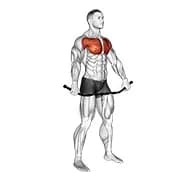
Clasp your hands behind your back, lift the sternum and pull the shoulders back and down. Don't arch the lower back — the stretch belongs in the chest, not the lumbar spine.
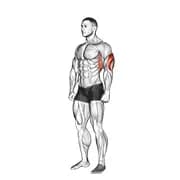 overhead triceps stretch2× 30 s per side
Elbow points at the ceiling, hand walks down between the shoulder blades. Keep the ribs down — otherwise the pelvis tips and you stretch your back, not the triceps.
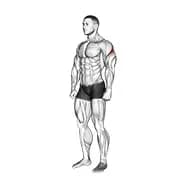 rear deltoid stretch1× 30 s per side
Arm straight across the chest, pull on the upper arm — never on the elbow joint. Keep the shoulder down or the pull migrates into your neck.
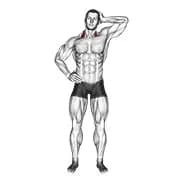 side push neck stretch1× 30 s per side
Ear toward the shoulder, the hand adds only the weight of the head — never pull. The opposite shoulder stays down.
Static stretching belongs AFTER the session, never before it — held before a heavy set it measurably costs force output. Move into each position until you feel mild tension, never pain, and breathe out into it. Hold still: no bouncing on a fatigued muscle. Skip a muscle that is cramping and walk it off first.
Day 21× / week
Lower A
Lower Body · Squat & glutes · Bi short · Tri long · Core
12
Exercises
38
Sets
~105
min
Warm-up~10 minLifting~81 minCardio5–10 minCool-down & stretching~7 minBiceps3Triceps3Quads7Hamstrings3Glutes10Calves5Core6
Coach's note
Leg press leads — at your size the strongest, safest quad builder in the room. Hamstrings, extension, then the pull-through to teach the hinge and the 45° hyperextension to finish it — at your bodyweight that back raise is already loaded, and the glutes grow from full hip extension, not squats alone. Five sets of standing calves follow — they carry 120 kg all day and still only grow with direct work. Arms sit at the end on purpose: preacher curls bias the short head of the biceps; overhead rope extensions put the long head of the triceps under stretch — the bias no pushdown gives it. Legs don't compete with arms, so lower days carry the extra arm volume. The adductor machine sits after the extension on purpose — the inner thigh is the one thigh region the press never finishes, and a strong adductor magnus pays straight back into the leg press. The pelvic tilt at the end is your Kegel work: at 120 kg every heavy leg-press set pressurizes the pelvic floor, so it gets trained like any other muscle — a lifted squeeze on the exhale, a full release after, never a strained push-down.
Time-saver
Short on time? Superset preacher curl + overhead triceps extension: one set of each back-to-back, then rest 60 s — saves ~4 min. Never superset the leg press.
%1RM65–70%RPE7 · 3 RIRTempo3-1-1Rest2 minmin~12
Jun80 kgInt110 kgAdv140 kg
Sled loaded. Feet mid-platform, knees track over toes, depth to ~90°, drive through the whole foot — never lock hard at the top.
Machine taken or not in your gym?
Warm-up sets
15 × 55 kg8 × 82.5 kg
Step by step
- Adjust the seat and footplate of the sled machine to a comfortable position.
- Sit on the sled machine with your back against the backrest and your feet shoulder-width apart on the footplate.
- Grip the handles on the sides of the seat for stability.
- Push the footplate away from your body by extending your legs, keeping your heels on the footplate.
- Continue pushing until your legs are almost fully extended, but without locking your knees.
- Pause for a moment at the top of the movement, then slowly lower the footplate back towards your body by bending your knees.
- Repeat for the desired number of repetitions.
%1RM65–70%RPE7 · 3 RIRTempo3-1-1Rest90 smin~8
Jun30 kgInt40 kgAdv50 kg
Machine stack. Hips glued to the pad, curl to a hard squeeze, 3 s down — control the eccentric or the set doesn't count.
Machine taken or not in your gym?
Warm-up sets
12 × 25 kg
Step by step
- Adjust the machine to fit your body and select the desired weight.
- Lie face down on the machine with your legs straight and your heels against the padded lever.
- Grasp the handles or the sides of the machine for stability.
- Keeping your upper body stationary, exhale and curl your legs up as far as possible without lifting your hips off the pad.
- Hold the contracted position for a brief pause as you squeeze your hamstrings.
- Inhale and slowly lower the lever back to the starting position.
- Repeat for the desired number of repetitions.
%1RM60–65%RPE7 · 3 RIRTempo2-0-1Rest60 smin~6
Jun35 kgInt50 kgAdv65 kg
Machine stack. Soft lock at the top, 1 s squeeze on the quads, never bounce out of the bottom.
Machine taken or not in your gym?
Warm-up sets
12 × 30 kg
Step by step
- Adjust the seat height and backrest of the machine to fit your body.
- Sit on the machine with your back against the backrest and your feet on the footpad.
- Grasp the handles or sidebars for stability.
- Extend your legs forward by straightening your knees, lifting the weight.
- Pause for a moment at the top, then slowly lower the weight back to the starting position.
- Repeat for the desired number of repetitions.
%1RM65–70%RPE7 · 3 RIRTempo3-1-1Rest60 smin~7
Jun40 kgInt55 kgAdv70 kg
Machine stack. Set the pads wide but pain-free, squeeze the knees together to a full stop, 3 s back out — the loaded stretch is the growth signal, never bounce into it.
Machine taken or not in your gym?
Warm-up sets
12 × 32.5 kg
Step by step
- Adjust the seat height and position yourself on the machine with your back against the backrest.
- Place your feet on the footrests and grasp the handles for stability.
- Engage your adductor muscles and slowly bring your legs together, squeezing your inner thighs.
- Pause for a moment at the peak contraction, then slowly return to the starting position.
- Repeat for the desired number of repetitions.
%1RM60–65%RPE7 · 3 RIRTempo2-0-1Rest60 smin~8
Jun25 kgInt35 kgAdv45 kg
Cable stack. Rope between the legs, face away from the machine, hips back until the hamstrings load, then squeeze the glutes to stand — the safest way to learn the hinge before RDL day.
Machine taken or not in your gym?
Warm-up sets
15 × 17.5 kg8 × 27.5 kg
Step by step
- Stand facing away from the cable machine with your feet shoulder-width apart.
- Grab the rope attachment with both hands and step forward, creating tension in the cable.
- Bend at the hips and lower your upper body until it is parallel to the ground, keeping your back straight.
- Engage your glutes and hamstrings to pull your body back up to the starting position.
- Repeat for the desired number of repetitions.
%1RM—RPE7 · 3 RIRTempo2-0-1Rest60 smin~6
JunBodyweightInt10 kgAdv20 kg
Hips on the pad edge, hinge down long, then squeeze the glutes to rise — stop in line with the body, never higher; hold a plate on the chest once bodyweight is easy.
Machine taken or not in your gym?
Warm-up sets
15 × 5 kg8 × 7.5 kg
Step by step
- Adjust the hyperextension bench so that your upper thighs are resting on the pad and your feet are secured.
- Cross your arms over your chest or place your hands behind your head.
- Lower your upper body towards the ground while keeping your back straight.
- Pause for a moment at the bottom, then raise your upper body back up until it is in line with your legs.
- Repeat for the desired number of repetitions.
%1RM60–65%RPE7 · 3 RIRTempo2-0-1Rest45–60 smin~9
Jun40 kgInt55 kgAdv70 kg
Machine stack. Full stretch at the bottom, drive onto the balls of the feet, 1 s squeeze — calves want volume, not heroics.
Machine taken or not in your gym?
Warm-up sets
12 × 32.5 kg
Step by step
- Adjust the machine to your height and stand with your feet shoulder-width apart.
- Place your shoulders under the pads and hold onto the handles for stability.
- Raise your heels as high as possible by extending your ankles.
- Pause for a moment at the top, then slowly lower your heels back down to the starting position.
- Repeat for the desired number of repetitions.
%1RM60–65%RPE7 · 3 RIRTempo2-0-1Rest45–60 smin~6
Jun15 kgInt20 kgAdv25 kg
Machine stack. Armpits into the pad, curl to a hard squeeze, 3 s down, never lose contact — the pad removes the swing so the short head of the biceps gets every rep.
Machine taken or not in your gym?
Warm-up sets
12 × 12.5 kg
Step by step
- Adjust the seat height and position yourself on the leverage machine.
- Place your upper arms on the pad and grip the handles with an underhand grip.
- Keep your back straight and your elbows positioned on the pad.
- Exhale and curl your forearms towards your upper arms, contracting your biceps.
- Pause for a moment at the top of the movement, squeezing your biceps.
- Inhale and slowly lower the handles back to the starting position.
- Repeat for the desired number of repetitions.
%1RM60–65%RPE7 · 3 RIRTempo2-0-1Rest45–60 smin~6
Jun15 kgInt20 kgAdv25 kg
Cable stack. Rope overhead, elbows narrow and high, extend until the arms lock, feel the stretch at the bottom — the overhead angle biases the long head of the triceps like no pushdown can.
Machine taken or not in your gym?
Warm-up sets
12 × 12.5 kg
Step by step
- Attach a rope to a cable machine at a high position.
- Stand facing away from the machine with your feet shoulder-width apart.
- Grasp the rope with both hands, palms facing each other, and bring your hands above your head.
- Keep your upper arms close to your head and your elbows pointing forward.
- Slowly lower the rope behind your head by bending your elbows.
- Pause for a moment, then extend your arms back up to the starting position.
- Repeat for the desired number of repetitions.
%1RM—RPE7 · 3 RIRTempo2-0-1Rest45–60 smin~6
JunBodyweightIntBodyweightAdvBodyweight
Lower back pressed into the floor, curl the pelvis toward the ribs, slow down — lower abs without yanking the neck.
Machine taken or not in your gym?
Step by step
- Lie flat on your back with your arms extended along your sides.
- Bend your knees and lift your feet off the ground, bringing your thighs perpendicular to the floor.
- Contract your abs and curl your hips off the floor, bringing your knees towards your chest.
- Pause for a moment at the top, then slowly lower your hips back down to the starting position.
- Repeat for the desired number of repetitions.
%1RM—RPE7 · 3 RIRTempo2-5-2Rest45–60 smin~8
JunBodyweightIntBodyweightAdvBodyweight
Lie down, knees bent. Exhale, tilt the pelvis and lift the pelvic floor — the stop-the-stream squeeze — hold 5 s at the top, then release fully. Squeeze up and in, never bear down; keep breathing the whole set.
Machine taken or not in your gym?
Step by step
- Lie flat on your back with your knees bent and feet flat on the ground.
- Place your hands by your sides.
- Engage your abs and tilt your pelvis upward, pressing your lower back into the ground.
- Hold this position for a few seconds, focusing on contracting your abs.
- Release the tilt and return to the starting position.
- Repeat for the desired number of repetitions.
%1RM—RPE7 · 3 RIRTempo—Rest—
JunBodyweightIntBodyweightAdvBodyweight
Easy cool-down walk. Keep it short — the lifting was the session.
Machine taken or not in your gym?
Step by step
- Adjust the incline level on the treadmill to your desired intensity.
- Stand on the treadmill with your feet shoulder-width apart.
- Start walking at a comfortable pace, ensuring that you maintain proper form.
- Engage your core muscles and keep your back straight throughout the exercise.
- Continue walking on the incline treadmill for the desired duration of your cardio workout.
- Gradually decrease the incline and speed of the treadmill to cool down before stopping.
Cool-down & stretching
~7 minLeg press and calf volume: hamstrings and calves first, then the hip. Use the bench for the glute work — supported positions, nothing that asks you to get up off the floor.
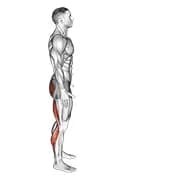 runners stretch2× 30 s per side
Front heel down, toes up, hinge forward from the hip with a flat back. A rounded back stretches nerve, not muscle.
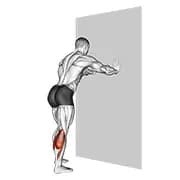 calf stretch with hands against wall2× 30 s per side
Back leg straight, heel down, drive the hip toward the wall. This targets the gastrocnemius — the heel never leaves the ground.
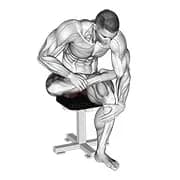 seated piriformis stretch1× 30 s per side
Foot outside the opposite knee, press gently against it with the elbow and rotate the torso. Ease off at once if anything tingles down the leg.
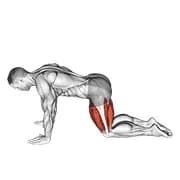 all fours hip flexor stretch1× 30 s per side
All fours, one leg long behind, let the hip sink. Deliberately tuck the pelvis — otherwise the pull goes into the lower back instead of the hip flexor.
Static stretching belongs AFTER the session, never before it — held before a heavy set it measurably costs force output. Move into each position until you feel mild tension, never pain, and breathe out into it. Hold still: no bouncing on a fatigued muscle. Skip a muscle that is cramping and walk it off first.
Day 31× / week
Upper B
Upper Body · Pull & V · Bi overall · Tri compound · Core
11
Exercises
32
Sets
~95
min
Warm-up~10 minLifting~70 minCardio10–15 minCool-down & stretching~5 minChest4Lats6Upper back & traps6Shoulders6Biceps3Triceps3Core3
Coach's note
The V-shape session. Four sets of high row for back thickness, four sets of machine incline for the upper chest, then a second pulldown angle and the straight-arm pulldown — pure lat, no arms stealing the set. Rear and side delts round the shoulder — the second lateral-raise hit of the week is what keeps the V widening. Cable curls are the overall biceps builder; seated dips load all three triceps heads as a compound. Dead bugs close with anti-extension bracing your 120 kg needs. Never cut this day short. The standing pelvic tilt closes the day — the same squeeze as on lower days, trained upright where it protects you most.
Time-saver
Short on time? Superset cable curl + seated dip: one set of each back-to-back, then rest 60 s — saves ~4 min. Never superset the high row.
%1RM65–70%RPE7 · 3 RIRTempo3-1-1Rest2 minmin~12
Jun40 kgInt55 kgAdv70 kg
Machine stack. Chest on the pad, pull the handles to the lower ribs, 1 s squeeze — this is thickness, not a shrug.
Machine taken or not in your gym?
Warm-up sets
15 × 27.5 kg8 × 42.5 kg
Step by step
- Adjust the seat height and foot platform to a comfortable position.
- Sit on the machine with your chest against the pad and your feet flat on the foot platform.
- Grasp the handles with an overhand grip, slightly wider than shoulder-width apart.
- Keep your back straight and engage your core.
- Pull the handles towards your body, squeezing your shoulder blades together.
- Pause for a moment at the peak of the movement, then slowly release the handles back to the starting position.
- Repeat for the desired number of repetitions.
%1RM65–70%RPE7 · 3 RIRTempo3-1-1Rest90 smin~10
Jun25 kgInt37.5 kgAdv50 kg
Machine stack. Seat low so the handles sit at upper-chest height, press up and slightly in, 3 s back — long arms need a deeper seat than the guy before you.
Machine taken or not in your gym?
Warm-up sets
15 × 20 kg8 × 27.5 kg
Step by step
- Adjust the seat and backrest of the leverage machine to a comfortable position.
- Sit on the machine with your back against the backrest and your feet flat on the floor.
- Grasp the handles with an overhand grip and position your hands slightly wider than shoulder-width apart.
- Push the handles forward and away from your body until your arms are fully extended.
- Pause for a moment, then slowly bend your elbows and lower the handles back towards your chest.
- Repeat for the desired number of repetitions.
%1RM60–65%RPE7 · 3 RIRTempo2-0-1Rest60–90 smin~6
Jun40 kgInt55 kgAdv70 kg
Machine stack. Thighs locked under the pad, drive the elbows toward the floor, let the shoulders travel all the way up at the top — width comes from the stretch.
Machine taken or not in your gym?
Warm-up sets
15 × 27.5 kg8 × 42.5 kg
Step by step
- Adjust the seat height and position yourself on the machine with your knees under the pads and your feet flat on the ground.
- Grasp the handles with an overhand grip, slightly wider than shoulder-width apart.
- Sit upright with your chest lifted and your shoulders back, maintaining a slight arch in your lower back.
- Engage your lats and pull the handles down towards your chest, squeezing your shoulder blades together.
- Pause for a moment at the bottom of the movement, then slowly release the handles back to the starting position.
- Repeat for the desired number of repetitions.
%1RM60–65%RPE7 · 3 RIRTempo2-0-1Rest60 smin~6
Jun15 kgInt20 kgAdv25 kg
Cable stack. Arms almost straight, hinge slightly forward, pull the bar to your thighs with the lats alone, 1 s squeeze. This is the width move — no biceps, no elbows, pure lat.
Machine taken or not in your gym?
Warm-up sets
12 × 12.5 kg
Step by step
- Attach a straight bar to the high pulley of a cable machine.
- Stand facing the machine with your feet shoulder-width apart.
- Grasp the bar with an overhand grip, keeping your arms straight and your palms facing down.
- Engage your lats and pull the bar down towards your thighs, keeping your arms straight throughout the movement.
- Pause for a moment at the bottom, then slowly return the bar to the starting position.
- Repeat for the desired number of repetitions.
%1RM60–65%RPE7 · 3 RIRTempo2-0-1Rest60 smin~6
Jun15 kgInt20 kgAdv25 kg
Machine stack. Soft elbows, open the rear delts on the stretch, squeeze the shoulder blades — rear delts finish the shoulder from behind.
Machine taken or not in your gym?
Warm-up sets
12 × 12.5 kg
Step by step
- Adjust the seat height and position yourself on the machine with your chest against the pad and your feet flat on the floor.
- Grasp the handles with an overhand grip and keep your arms slightly bent.
- Exhale and squeeze your shoulder blades together as you pull the handles back and outward, away from your body.
- Pause for a moment at the peak contraction, then inhale and slowly return to the starting position.
- Repeat for the desired number of repetitions.
%1RM60–65%RPE7 · 3 RIRTempo2-0-1Rest45–60 smin~6
Jun5 kgInt7.5 kgAdv10 kg
Per side, low pulley behind you. Lead with the elbow to shoulder height, never let the shoulder shrug up — the cable holds tension exactly where the dumbbell loses it.
Machine taken or not in your gym?
Warm-up sets
12 × 5 kg
Step by step
- Stand with your feet shoulder-width apart and grasp the cable handles with an overhand grip.
- Keep your arms straight and your core engaged.
- Raise your arms out to the sides until they are parallel to the floor.
- Pause for a moment at the top, then slowly lower your arms back down to the starting position.
- Repeat for the desired number of repetitions.
%1RM60–65%RPE7 · 3 RIRTempo2-0-1Rest45–60 smin~6
Jun10 kgInt15 kgAdv20 kg
Cable stack. Elbows pinned, curl to a hard squeeze, 3 s down — the overall biceps builder that loads both heads under constant tension.
Machine taken or not in your gym?
Warm-up sets
12 × 10 kg
Step by step
- Stand facing the cable machine with your feet shoulder-width apart.
- Grasp the cable attachment with an underhand grip, palms facing up.
- Keep your elbows close to your sides and your upper arms stationary.
- Exhale and curl the cable attachment towards your shoulders, contracting your biceps.
- Pause for a moment at the top of the movement, squeezing your biceps.
- Inhale and slowly lower the cable attachment back to the starting position.
- Repeat for the desired number of repetitions.
%1RM60–65%RPE7 · 3 RIRTempo2-0-1Rest60–90 smin~6
Jun20 kgInt30 kgAdv40 kg
Machine stack. Upright torso, elbows travel back, full lock at the bottom — the compound that loads all three triceps heads together without a bench setup.
Machine taken or not in your gym?
Warm-up sets
15 × 15 kg8 × 22.5 kg
Step by step
- Adjust the seat height so that your feet are flat on the ground and your knees are at a 90-degree angle.
- Grasp the handles of the leverage machine with your palms facing down and your arms fully extended.
- Slowly lower your body by bending your elbows until your upper arms are parallel to the ground.
- Pause for a moment, then push yourself back up to the starting position by straightening your arms.
- Repeat for the desired number of repetitions.
%1RM—RPE7 · 3 RIRTempo2-0-1Rest45–60 smin~6
JunBodyweightIntBodyweightAdvBodyweight
Lower back pressed flat into the floor, opposite arm and leg reach out slowly, breathe out on the reach — this is the bracing your 120 kg needs before any barbell.
Machine taken or not in your gym?
Step by step
- Lie flat on your back with your arms extended towards the ceiling.
- Bend your knees and lift your legs off the ground, creating a 90-degree angle at your hips and knees.
- Engage your core and lower back to press your lower back into the ground.
- Slowly lower your right arm and left leg towards the ground, keeping them straight and hovering just above the floor.
- Pause for a moment, then return to the starting position.
- Repeat the movement with your left arm and right leg.
- Continue alternating sides for the desired number of repetitions.
%1RM—RPE7 · 3 RIRTempo2-5-2Rest45–60 smin~5
JunBodyweightIntBodyweightAdvBodyweight
Stand tall, hands on hips. Exhale, tuck the pelvis and lift the pelvic floor — the same stop-the-stream squeeze, now upright — hold 5 s, release fully. This is the version you brace with under every standing lift; never hold your breath.
Machine taken or not in your gym?
Step by step
- Stand with your feet shoulder-width apart and your knees slightly bent.
- Place your hands on your hips or let them hang by your sides.
- Engage your core muscles and tilt your pelvis forward, pushing your lower back towards the wall behind you.
- Hold the position for a few seconds, then release and return to the starting position.
- Repeat for the desired number of repetitions.
%1RM—RPE7 · 3 RIRTempo—Rest—
JunBodyweightIntBodyweightAdvBodyweight
Easy cross-trainer finish. Keep the resistance low — recovery, not a HIIT block.
Machine taken or not in your gym?
Step by step
- Adjust the resistance level and incline of the elliptical machine to your desired settings.
- Step onto the pedals of the machine and grip the handles lightly.
- Begin by pushing down with your feet and pulling the handles towards your body.
- Continue this motion, alternating between pushing and pulling, to simulate a walking or running motion.
- Maintain a steady pace and keep your core engaged throughout the exercise.
- Continue for the desired duration of your cardio workout.
- Gradually decrease the intensity and speed of the machine before stepping off.
Cool-down & stretching
~5 minA pulling day, so the lat is the target — the bench version keeps you upright and needs no kneeling. Upper back, rear delt and neck finish it.
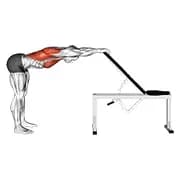 back pec stretch2× 30 s
Hands on the bench, push the hips back until the arms are straight, let the head sink between them. Long back, no rounding.
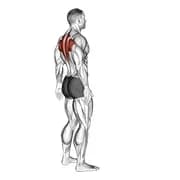 upper back stretch1× 30 s
Interlace the fingers, press the arms forward and deliberately round the upper back to spread the shoulder blades. The exact counter-move to every row.
- rear deltoid stretch1× 30 s per side
Arm straight across the chest, pull on the upper arm — never on the elbow joint. Keep the shoulder down or the pull migrates into your neck.
- side push neck stretch1× 30 s per side
Ear toward the shoulder, the hand adds only the weight of the head — never pull. The opposite shoulder stays down.
Static stretching belongs AFTER the session, never before it — held before a heavy set it measurably costs force output. Move into each position until you feel mild tension, never pain, and breathe out into it. Hold still: no bouncing on a fatigued muscle. Skip a muscle that is cramping and walk it off first.
Day 41× / week
Lower B
Lower Body · Hinge emphasis · Bi long · Brachialis · Tri medial · Core
12
Exercises
37
Sets
~100
min
Warm-up~10 minLifting~77 minCardio5–10 minCool-down & stretching~6 minBiceps6Triceps3Quads3Hamstrings7Glutes9Calves5Core3
Coach's note
Hinge day. The Romanian deadlift is the most important lift for a heavy beginner — strong hamstrings and glutes take load off the knees everywhere in life. The hack squat grooves a loadable squat pattern without a bar on your back. Reverse hypers finish the glutes, and five sets of seated calf raise feed the soleus the volume it answers to. Arms close the week: incline curls stretch the long head of the biceps, hammers thicken the brachialis under the peak, and reverse-grip pushdowns bias the medial head of the triceps. The adductor machine returns before the reverse hyper — six seated, joint-friendly sets a week close the inner-thigh gap without stealing hinge recovery. The tilt-into-bridge pairs the pelvic-floor squeeze with full hip extension — floor and glutes fire together at the top, which is exactly how they work under a heavy hinge.
Time-saver
Short on time? Superset incline curl + reverse-grip pushdown, then hammer curl alone: one set of each pair back-to-back, then rest 60 s — saves ~5 min. Never superset the RDL.
%1RM65–70%RPE7 · 3 RIRTempo3-1-1Rest2 minmin~9
Jun16 kgInt24 kgAdv32 kg
Dumbbells at the sides. Soft knees, hips travel back until the hamstrings load, stand by squeezing the glutes — the bar path is a future upgrade; own this pattern first.
Machine taken or not in your gym?
Warm-up sets
15 × 12 kg8 × 18 kg
Step by step
- Stand with your feet shoulder-width apart, holding a dumbbell in each hand with an overhand grip.
- Keeping your back straight and your core engaged, hinge at the hips and lower the dumbbells towards the ground, allowing your knees to bend slightly.
- Lower the dumbbells until you feel a stretch in your hamstrings, then push through your heels and engage your glutes to return to the starting position.
- Repeat for the desired number of repetitions.
%1RM65–70%RPE7 · 3 RIRTempo3-1-1Rest90 smin~8
Jun40 kgInt60 kgAdv80 kg
Sled loaded. Shoulders and hips glued to the pad, feet mid-to-high on the platform, down until the thighs are parallel, drive through the whole foot — a squat your spine does not have to carry.
Machine taken or not in your gym?
Warm-up sets
15 × 30 kg8 × 45 kg
Step by step
- Adjust the sled machine to a comfortable position for your height.
- Stand with your feet shoulder-width apart on the platform, toes slightly pointed outwards.
- Hold onto the handles or bars for stability.
- Lower your body by bending your knees and hips, keeping your back straight and chest up.
- Continue lowering until your thighs are parallel to the ground or slightly below.
- Pause for a moment, then push through your heels to raise your body back up to the starting position.
- Repeat for the desired number of repetitions.
%1RM60–65%RPE7 · 3 RIRTempo2-0-1Rest60 smin~8
Jun30 kgInt40 kgAdv50 kg
Machine stack. Seat so the pad hits just above the heels, curl hard, 3 s out — seated angle hits the hamstrings differently from the lying curl.
Machine taken or not in your gym?
Warm-up sets
12 × 25 kg
Step by step
- Adjust the machine to fit your body and sit on it with your back against the backrest.
- Place your lower legs under the padded lever, just above your ankles.
- Grasp the handles on the sides of the machine for support.
- Keeping your upper legs stationary, exhale and curl your legs up as far as possible.
- Hold the contracted position for a brief pause as you squeeze your hamstrings.
- Inhale and slowly lower the lever back to the starting position.
- Repeat for the desired number of repetitions.
%1RM65–70%RPE7 · 3 RIRTempo3-1-1Rest60 smin~7
Jun40 kgInt55 kgAdv70 kg
Machine stack. Set the pads wide but pain-free, squeeze the knees together to a full stop, 3 s back out — the loaded stretch is the growth signal, never bounce into it.
Machine taken or not in your gym?
Warm-up sets
12 × 32.5 kg
Step by step
- Adjust the seat height and position yourself on the machine with your back against the backrest.
- Place your feet on the footrests and grasp the handles for stability.
- Engage your adductor muscles and slowly bring your legs together, squeezing your inner thighs.
- Pause for a moment at the peak contraction, then slowly return to the starting position.
- Repeat for the desired number of repetitions.
%1RM60–65%RPE7 · 3 RIRTempo2-0-1Rest60 smin~6
JunBodyweightInt10 kgAdv20 kg
Chest on the pad, hips at the edge. Lift the legs to the line of the body and squeeze 1 s — never higher. The glutes finish the rep; the lower back never does.
Machine taken or not in your gym?
Warm-up sets
12 × 5 kg
Step by step
- Adjust the leverage machine to fit your body and secure your feet in the foot pads.
- Lie face down on the machine with your upper body hanging off the edge and your hips resting on the pad.
- Cross your arms over your chest or place them behind your head.
- Engage your glutes and hamstrings to lift your legs upward until they are parallel to the ground.
- Pause for a moment at the top, then slowly lower your legs back down to the starting position.
- Repeat for the desired number of repetitions.
%1RM60–65%RPE7 · 3 RIRTempo2-0-1Rest45–60 smin~9
Jun25 kgInt35 kgAdv45 kg
Machine stack. Full stretch, drive up, 1 s squeeze — seated calf work owns the soleus that standing work misses.
Machine taken or not in your gym?
Warm-up sets
12 × 20 kg
Step by step
- Adjust the seat height so that your knees are slightly bent and your feet are flat on the footplate.
- Place your toes on the footplate with your heels hanging off the edge.
- Grasp the handles or the sides of the seat for stability.
- Push through the balls of your feet to raise your heels as high as possible.
- Pause for a moment at the top, then slowly lower your heels back down to the starting position.
- Repeat for the desired number of repetitions.
%1RM60–65%RPE7 · 3 RIRTempo2-0-1Rest45–60 smin~6
Jun8 kgInt12 kgAdv16 kg
Incline bench ~45°. Arms hang long, curl without swinging, 3 s down — the stretch position is how the long head of the biceps actually grows.
Machine taken or not in your gym?
Warm-up sets
12 × 8 kg
Step by step
- Set an incline bench to a 45-degree angle and sit on it with a dumbbell in each hand, palms facing forward.
- Rest your upper arms on the incline bench and let your elbows hang down, fully extending your arms.
- Keeping your upper arms stationary, exhale and curl the weights while contracting your biceps.
- Continue to raise the dumbbells until your biceps are fully contracted and the dumbbells are at shoulder level.
- Hold the contracted position for a brief pause as you squeeze your biceps.
- Inhale and slowly begin to lower the dumbbells back to the starting position.
- Repeat for the desired number of repetitions.
%1RM60–65%RPE7 · 3 RIRTempo2-0-1Rest45–60 smin~6
Jun8 kgInt12 kgAdv16 kg
Neutral grip. Elbows tight, curl to the shoulder, 3 s down — hammers thicken the brachialis that pushes the biceps peak up from underneath.
Machine taken or not in your gym?
Warm-up sets
12 × 8 kg
Step by step
- Stand up straight with a dumbbell in each hand, palms facing your torso.
- Keep your elbows close to your torso and rotate the palms of your hands until they are facing forward.
- This will be your starting position.
- Now, keeping the upper arms stationary, exhale and curl the weights while contracting your biceps.
- Continue to raise the weights until your biceps are fully contracted and the dumbbells are at shoulder level.
- Hold the contracted position for a brief pause as you squeeze your biceps.
- Then, inhale and slowly begin to lower the dumbbells back to the starting position.
- Repeat for the recommended amount of repetitions.
%1RM60–65%RPE7 · 3 RIRTempo2-0-1Rest45–60 smin~6
Jun12.5 kgInt17.5 kgAdv22.5 kg
Cable stack, underhand grip on a straight or EZ bar. Elbows pinned, push to a full lock, 1 s squeeze — reverse grip biases the medial head the rope pushdown under-hits.
Machine taken or not in your gym?
Warm-up sets
12 × 10 kg
Step by step
- Attach a straight bar to a high pulley cable machine.
- Stand facing the machine with your feet shoulder-width apart.
- Grasp the bar with an underhand grip, palms facing up, and your hands shoulder-width apart.
- Keep your elbows close to your sides and your upper arms stationary throughout the exercise.
- Using your triceps, push the bar down until your arms are fully extended and your triceps are contracted.
- Pause for a moment, then slowly return the bar to the starting position.
- Repeat for the desired number of repetitions.
%1RM—RPE7 · 3 RIRTempo2-0-1Rest45–60 smin~6
Jun35 kgInt45 kgAdv55 kg
Cable stack. Crunch the rib-cage down, hips still, 1 s squeeze — progressive overload for the rectus; the visible six-pack still needs the deficit.
Machine taken or not in your gym?
Warm-up sets
12 × 27.5 kg
Step by step
- Sit on a cable machine with your feet flat on the ground and your knees bent.
- Hold the cable handle with both hands and position it behind your head.
- Engage your abs and slowly curl your upper body forward, bringing your chest towards your knees.
- Pause for a moment at the top, then slowly return to the starting position.
- Repeat for the desired number of repetitions.
%1RM—RPE7 · 3 RIRTempo2-3-2Rest45–60 smin~7
JunBodyweightIntBodyweightAdvBodyweight
From the tilt, roll up into the bridge: pelvic floor and glutes squeeze together at the top for 3 s, then roll down bone by bone. The full release matters as much as the squeeze — never hold your breath.
Machine taken or not in your gym?
Step by step
- Lie on your back with your knees bent and feet flat on the ground.
- Place your arms by your sides with your palms facing down.
- Engage your glutes and core muscles.
- Tilt your pelvis upward, lifting your hips off the ground.
- Hold the bridge position for a few seconds.
- Slowly lower your hips back down to the starting position.
- Repeat for the desired number of repetitions.
%1RM—RPE7 · 3 RIRTempo—Rest—
JunBodyweightIntBodyweightAdvBodyweight
Easy cool-down walk after the hinge day.
Machine taken or not in your gym?
Step by step
- Adjust the incline level on the treadmill to your desired intensity.
- Stand on the treadmill with your feet shoulder-width apart.
- Start walking at a comfortable pace, ensuring that you maintain proper form.
- Engage your core muscles and keep your back straight throughout the exercise.
- Continue walking on the incline treadmill for the desired duration of your cardio workout.
- Gradually decrease the incline and speed of the treadmill to cool down before stopping.
Cool-down & stretching
~6 minRomanian deadlifts put the hamstrings under the longest tension of your week. Stretch them standing with a flat back, then let the hip rotators and the side of the trunk go.
- runners stretch2× 30 s per side
Front heel down, toes up, hinge forward from the hip with a flat back. A rounded back stretches nerve, not muscle.
- seated piriformis stretch1× 30 s per side
Foot outside the opposite knee, press gently against it with the elbow and rotate the torso. Ease off at once if anything tingles down the leg.
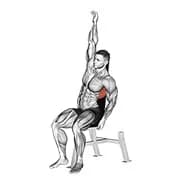 seated lower back stretch1× 30 s per side
Sit on the bench, one arm overhead, lean to the opposite side. Both glutes stay on the bench — otherwise you tip out instead of stretching.
- calf stretch with hands against wall1× 30 s per side
Back leg straight, heel down, drive the hip toward the wall. This targets the gastrocnemius — the heel never leaves the ground.
Static stretching belongs AFTER the session, never before it — held before a heavy set it measurably costs force output. Move into each position until you feel mild tension, never pain, and breathe out into it. Hold still: no bouncing on a fatigued muscle. Skip a muscle that is cramping and walk it off first.
For the trainer
Coaching standards
- 01
Protein first — 200–220 g every day (2.2 g per kg of your ~100 kg target weight). It protects muscle while the fat comes off.
- 02
A moderate deficit only — about 500 kcal under maintenance (~2,600–2,800 kcal at 190 cm / 120 kg). Crash diets burn muscle, and muscle is the whole point.
- 03
8–10k steps daily — walking is your fat-loss engine; the gym is your muscle engine. Don't confuse their jobs.
- 04
7–9 h sleep — at 120 kg, recovery capacity is your limiting factor before volume ever is.
- 05
Machines are not the easy option, they are the smart one — train them as hard as any barbell.
For the trainer
Avoid these mistakes
Starting with running or jump work — at 120 kg that's a knee injury on a schedule. Incline walking does the same job safely.
Crash-dieting the weight off — you'd arrive at 90 kg with no muscle and the same body, just smaller.
Weighing daily and panicking — water swings at your size are ±2 kg. One weekly weigh-in, trend over weeks.
Skipping a session because the week got busy — two sessions is a fine week; zero is how programs die.
Skipping the arm-head finishers on lower days — preacher, overhead tri, incline curl, hammer and reverse-grip pushdown are how each head gets its stimulus; cutting them quietly deletes the arms you asked for.
Chasing a six-pack with more ab sets — abs are already trained four times a week, twice under load; the visible ones come from the deficit and daily steps.
Treating the 12-week block as a one-time beginner course — after deload you either restart the cycle heavier or graduate; staying in 'learn mode' forever is how physiques stall.